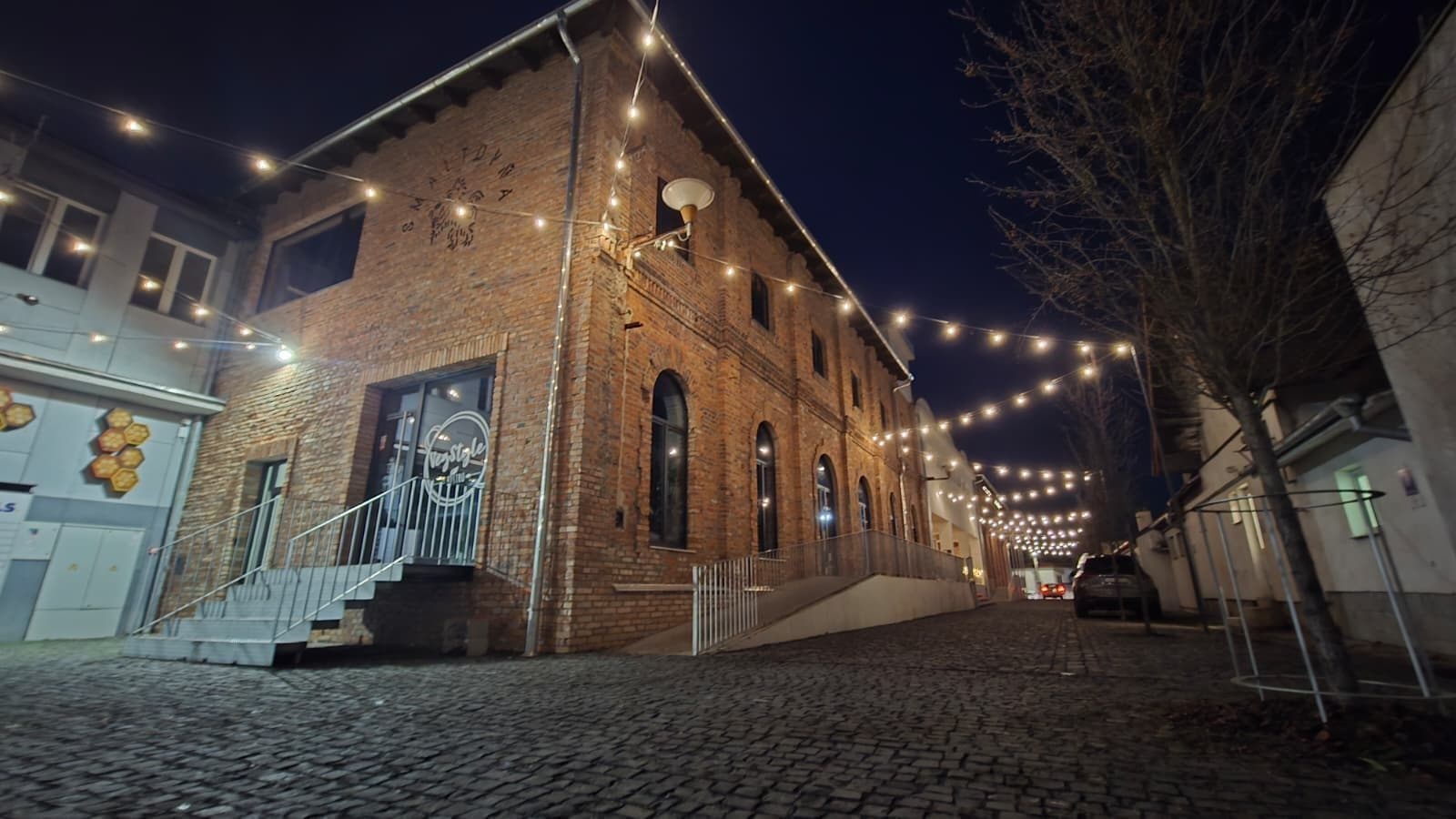
Juraj Rakottyay’s First Hungarian Enamelware Factory
In the last decade of the 19th century, an industrial complex grew on today’s Martina Rázusa street in Lučenec that would define the economy of the entire Novohrad region for decades. It was here, in 1892, that industrialist Juraj (György) Rakottyay founded the First Hungarian Enamelware Factory — a company that quickly ranked among the most important enamelware producers in Austria-Hungary.
In the interwar period the enamelworks employed more than a thousand workers. Pots, kettles and cookware bearing the lion mark found their way into households across Europe. After 1989, however, production fell silent and the complex in the heart of the city began to decay.
New life came with a renovation designed by the Bratislava studio GutGut, which began in 2017. The architects preserved the historic layers — brick masonry, steel structures, industrial details — and complemented them sensitively with modern elements. The project won the CE ZA AR architecture award and today stands as an example of the best industrial-heritage revitalisation in Slovakia.
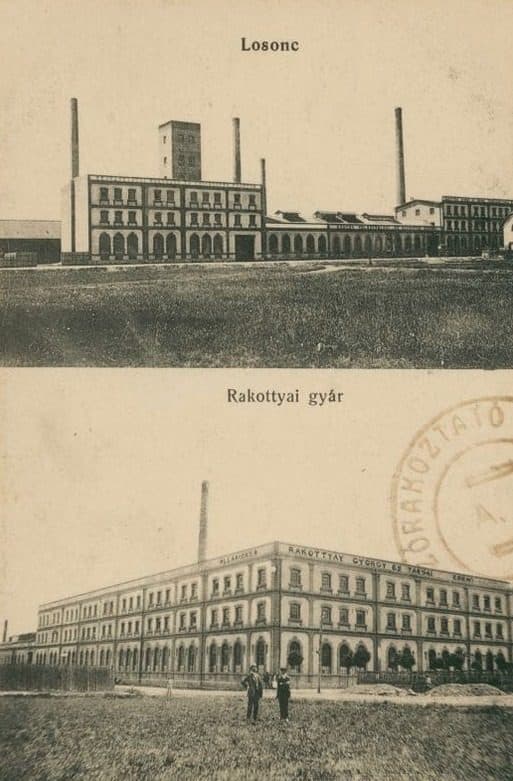
Rakottyay — early 20th century
Timeline
1892
The founding year
Industrialist Juraj (György) Rakottyay founds the First Hungarian Enamelware Factory in Lučenec. The works quickly becomes one of the most important producers of enamelware in Austria-Hungary.
1895
The Rakottyay building
The main industrial building of the complex rises on today’s Martina Rázusa street — industrial architecture that still stands today and carries its founder’s name.
1920–1930
The golden age
At the height of its prosperity the enamelworks employs more than 1,000 workers. Enamelware bearing the lion mark is exported across the whole of Europe.
1989
The end of the industrial era
After 1989 production gradually falls silent. The historic complex in the heart of Lučenec begins to decay and stands unused for decades.
2017
The GutGut renovation
The Bratislava-based architecture studio GutGut begins a sensitive transformation of the site — preserving the building’s historic layers and complementing them with light modern elements.
2023
Smaltovňa lives again
The complex reopens as an urban ecosystem: 14 loft apartments, restaurants, shops, coworking and offices. The project wins the CE ZA AR architecture award and the attention of Forbes Slovakia.
Frequently asked questions about the history
When was the enamel factory in Lučenec founded?
Industrialist Juraj (György) Rakottyay founded the First Hungarian Enamelware Factory in 1892. The main building of the complex, which still stands today, dates from 1895.
What did the Rakottyay enamelworks produce?
Enamelware — pots, kettles and kitchen vessels bearing the lion mark. In its golden age (the 1920s and 1930s) the factory employed over 1,000 workers and exported across the whole of Europe.
Who renovated Smaltovňa Lučenec?
The renovation was designed by the Bratislava-based architecture studio GutGut. The project won the CE ZA AR architecture award and was featured in archinfo.sk and Forbes Slovakia.
What is in the Smaltovňa building today?
Today Smaltovňa Lučenec is an urban ecosystem: 14 loft apartments, the Origin restaurant, VegStyle Bistro, Pekárninka, Profibikers, Mobilonline, Trinásty and the PRIESTOR coworking space.
Experience the history for yourself
Live in a loft, dine at Origin or rent an office — all within the original spaces of the enamelworks.
Full expert article on the renovation at Archinfo.sk (in Slovak) →